No products in the cart.: $0.00

Lavender

ORY® product lines:
☑ Skincare
☑ Haircare
☑ Handmade Soap
☑ Cosmetics — full dual-use botanical
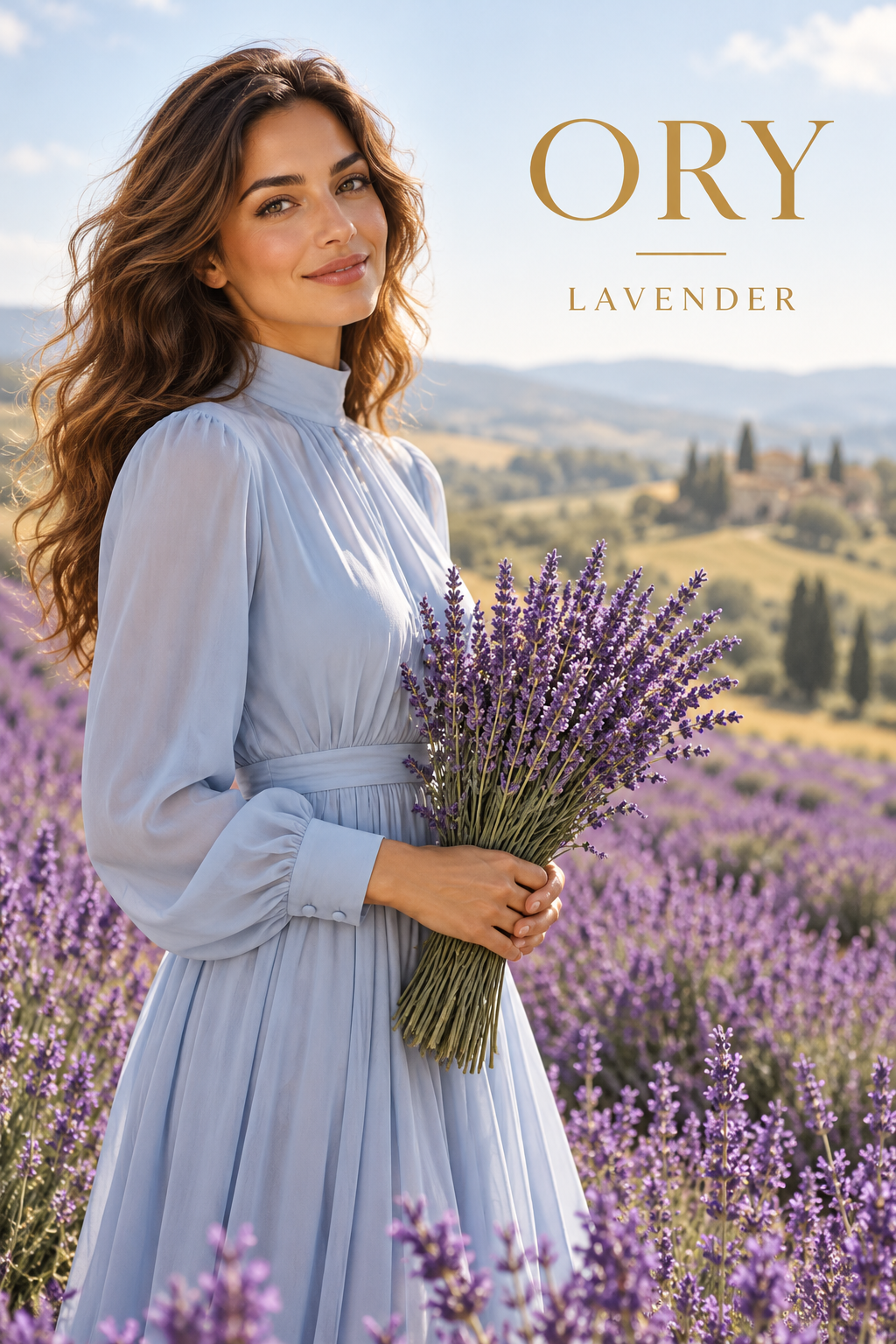
Lavender (Lavandula angustifolia) is the Mediterranean mint-family flower whose calming scent and antiseptic tradition make it one of the most popular botanicals in skin and hair care. This document covers the dried buds and their oil infusion; the steam-distilled essential oil is a separate, more concentrated ingredient. Lavender’s linalool and linalyl acetate have documented antimicrobial, anti-inflammatory, and analgesic activity [1]; lavender oil accelerated wound contraction and granulation through TGF-β in an animal model [3]; and lavender is the botanical with the strongest hair-related clinical signal — a randomized trial of aromatherapy massage (lavender, rosemary, thyme, cedarwood in carrier oils) significantly improved alopecia areata [2], and lavender oil promoted hair growth in mice [4]. Oil infusion delivers these benefits gently, with far less sensitization risk than neat essential oil.
What is Lavender made of?
Dried lavender buds infused in oil release [1]:
Choose L. angustifolia (English/true lavender) for skin gentleness; lavandin is more camphoraceous and better suited to soap scent.
- Linalool and linalyl acetate: The principal calming, antimicrobial, and anti-inflammatory monoterpenes.
- 1,8-cineole, camphor (traces), lavandulyl acetate: Supporting antimicrobial terpenes (higher in L. × intermedia lavandin).
- Coumarins and flavonoids (partly oil-soluble): Antioxidant.
- Carrier oil fatty acids and vitamin E: Emollient base.
What skin type is best suited for Lavender?
Lavender-infused oil suits all seven ORY® skin types when the carrier matches the skin:
- Sensitive: Gentle anti-inflammatory infusion (far milder than essential oil); patch test.
- Acne-prone: Antimicrobial and anti-inflammatory; use grapeseed or safflower infusion.
- Oily: Light carrier at low levels.
- Combination: Jojoba infusion for balance.
- Dry: Sweet-almond infusion nourishes and soothes.
- Mature: Antioxidant and repair support; relaxing evening oil.
- Normal: Daily calming face or body oil.
What hair type is best suited for Lavender?
Lavender is a leading botanical for scalp health and hair vitality:
- Mature or thinning: Randomized trial of lavender-containing aromatherapy massage improved alopecia areata [2]; hair-growth promotion in mice [4] (cosmetic support claims).
- Dandruff-prone scalp: Antimicrobial and anti-inflammatory support.
- Oily scalp: Mild antiseptic, balancing; light carrier.
- Sensitive scalp: Calming infusion (not neat essential oil).
- Dry or damaged: Conditions scalp and ends.
- Curly, coily, straight, wavy, color-treated: Scalp massage oil for all types.
What are the benefits of Lavender?
Lavender’s benefits are documented in pharmacological and clinical studies [1–4]:
- Antimicrobial: Linalool and linalyl acetate inhibit bacteria and fungi [1].
- Anti-inflammatory and analgesic: Reduces redness and discomfort [1].
- Wound healing: Accelerated wound contraction and collagen synthesis via TGF-β [3].
- Hair and scalp support: Clinical improvement in alopecia areata with lavender-containing massage [2]; growth promotion in animal model [4].
- Calming aroma: Relaxation benefit in aromatherapy studies; supports sleep-time products.
- Antioxidant: Coumarins and flavonoids.
- Emollient: Infused oil nourishes skin and scalp.
- Soap: Buds and infusion give a classic lavender bar; lavender essential oil anchors the scent.
Dual use across ORY® product lines
Lavender buds and infused oil serve all four ORY® lines; the infusion is the gentle, low-sensitization way to deliver lavender.
Pros and cons of Lavender
Pros
Cons
- Strong tradition plus clinical hair data: [2, 4].
- Gentle delivery: Infusion avoids the sensitization risk of neat essential oil.
- Beloved aroma: High customer demand.
- Customer-selectable carrier: Build-Your-Own friendly.
- Four-line utility: Every ORY® product.
- Fragrance allergens: Linalool oxidizes to sensitizing hydroperoxides; keep infusions fresh with vitamin E; patch test.
- Infusion aroma is subtle: Customers expecting strong scent need essential oil added.
- Buds brown in soap: Topping only.
- Hair evidence is preclinical/combination: Keep claims cosmetic.
- Endocrine questions: Case reports linked lavender/tea tree products to prepubertal gynecomastia; evidence is weak, but ORY® avoids marketing lavender oils to young children.
What is the best application of Lavender?
Lavender-infused oil is a nightly calmer and a scalp massage staple:
- Night face oil: 3–5 drops PM for calming and repair.
- Body or massage oil: Relaxation and skin nourishment.
- After-sun oil: With chamomile infusion.
- Balm: For minor irritation, insect bites, and dry patches.
- Scalp massage oil: 2–3 times weekly, 20 minutes before shampooing; combine with rosemary infusion for thinning hair.
- Soap: Lavender bar with infused oil and bud topping.
- Cosmetics: Lip balm; solid perfume.
Best oils to infuse Lavender
ORY® customers can choose the carrier oil for their Lavender infusion. Recommended options:
- Jojoba: Stable, sebum-like; ideal for face and scalp oils.
- Sweet almond: Nourishing body and massage oil base.
- Grapeseed: Light, fast-absorbing; oily and acne-prone skin.
- Safflower (high-linoleic): Very light; barrier-supporting for acne-prone skin.
- Sunflower: Affordable, light; soap and lotion base.
- Coconut (fractionated): Odorless, stable; lets lavender aroma lead; massage and lip products.
- Recommendation: Jojoba or sweet almond for skin and hair; sunflower or olive for soap.
Peer-reviewed references
- Cavanagh HMA, Wilkinson JM. Biological activities of lavender essential oil. Phytotherapy Research. 2002;16(4):301–308.
- Hay IC, Jamieson M, Ormerod AD. Randomized trial of aromatherapy: successful treatment for alopecia areata. Archives of Dermatology. 1998;134(11):1349–1352.
- Mori HM, Kawanami H, Kawahata H, Aoki M. Wound healing potential of lavender oil by acceleration of granulation and wound contraction through induction of TGF-β in a rat model. BMC Complementary and Alternative Medicine. 2016;16:144.
- Lee BH, Lee JS, Kim YC. Hair growth-promoting effects of lavender oil in C57BL/6 mice. Toxicological Research. 2016;32(2):103–108.
Disclaimer:
The information on this page is provided by ORY International, LC for educational purposes only. It summarizes published research about lavender flower and lavender-infused oil as an ingredient, including laboratory and animal studies and clinical studies of formulas that may differ from ORY® products. Results from these studies may not apply to every person or to ORY® products. This page is not medical advice and does not replace advice from a dermatologist, physician, or other qualified healthcare provider.
ORY® Skincare, Haircare, Handmade Soap, and Cosmetics products are cosmetics. They are not intended to diagnose, treat, cure, mitigate, or prevent any disease or condition, including hair loss (including alopecia areata), acne, dandruff, wounds, burns, insect bites, infections, anxiety, or sleep problems. References to FDA or Cosmetic Ingredient Review (CIR) findings describe the ingredient, not ORY® products, and do not mean FDA has reviewed or approved any ORY® product.
Results vary by skin and scalp type, formulation, and use. Lavender contains fragrance compounds, such as linalool, that can cause allergic reactions, especially once they oxidize, and any cosmetic can cause irritation, sometimes from other ingredients. Always patch test, follow label directions, and stop use if irritation occurs. If you are pregnant, nursing, have a medical condition, or are buying for a child, consult a healthcare provider before use.
ORY International, LC works to keep this page accurate and current but makes no warranty as to its completeness. To the fullest extent permitted by law, ORY International, LC is not liable for any loss or injury arising from reliance on this information or from use of any product contrary to its label directions. To report a reaction, contact us at [insert contact email / phone].