No products in the cart.: $0.00

Rosemary
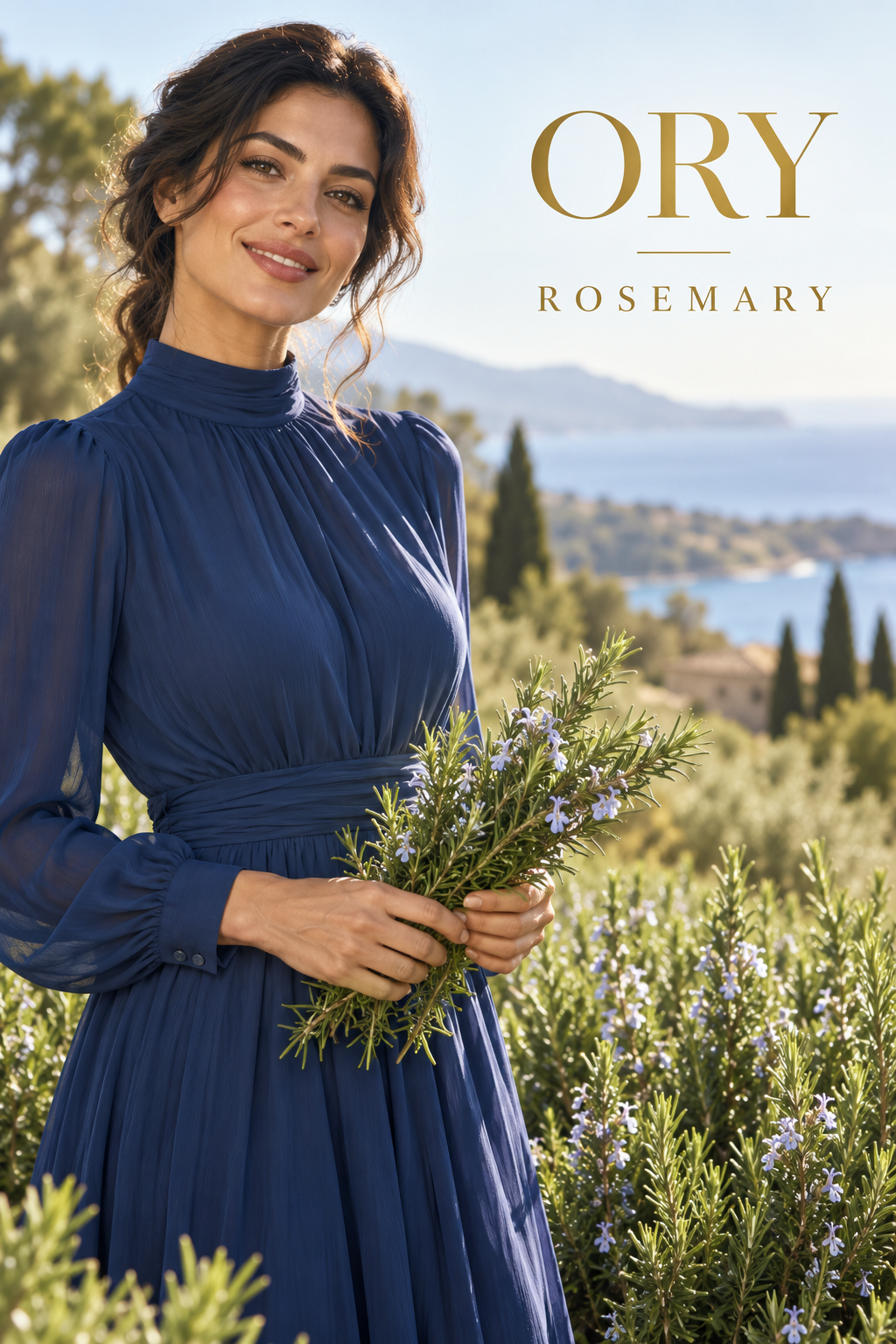

ORY® product lines:
☑ Skincare
☑ Haircare (hero ingredient)
☑ Handmade Soap
☑ Cosmetics — full dual-use botanical
Rosemary (Salvia rosmarinus, formerly Rosmarinus officinalis) is the evergreen Mediterranean herb whose leaves carry two families of actives: aromatic terpenes (1,8-cineole, camphor, α-pinene) with antimicrobial and circulation-stimulating effects, and phenolic diterpenes (carnosic acid, carnosol) and rosmarinic acid with exceptional antioxidant and anti-inflammatory power [3]. Rosemary is ORY®‘s hero scalp botanical: a randomized trial found rosemary oil comparable to 2% minoxidil for androgenetic hair loss over six months, with less scalp itching [1], and rosemary leaf extract promoted hair growth in an animal model by inhibiting androgen signaling at the follicle [2]. For skin, rosemary extract protected against UV-induced damage in cell studies and human volunteers [4]. Rosemary oleoresin is also a natural antioxidant that extends the shelf life of every ORY® oil and soap.
What is Rosemary made of?
Dried rosemary leaves infused in oil release [3]:
- Carnosic acid and carnosol (phenolic diterpenes): Potent, oil-soluble antioxidants; anti-inflammatory; the basis of rosemary oleoresin extract (ROE) used to protect oils.
- Rosmarinic acid: Antioxidant, anti-inflammatory (mostly water-soluble; partly captured).
- 1,8-cineole, camphor, α-pinene, borneol: Aromatic terpenes with antimicrobial, warming, circulation-stimulating effects.
- Ursolic and oleanolic acids (triterpenes): Anti-inflammatory; studied for skin and hair.
- Carrier oil fatty acids and vitamin E: Emollient base.
What skin type is best suited for Rosemary?
Rosemary-infused oil suits most ORY® skin types, favoring oily and dull skin:
- Oily: Astringent, antimicrobial; grapeseed infusion.
- Acne-prone: Anti-inflammatory and antibacterial.
- Combination: Balancing jojoba infusion.
- Mature: Carnosic acid antioxidant protection against UV-induced aging [4]; circulation boost for radiance.
- Normal: Antioxidant and toning body/face oil.
- Dry: Olive infusion for body; limited facial use (stimulating).
- Sensitive: Use cautiously at low levels — terpenes can tingle; patch test.
What hair type is best suited for Rosemary?
Rosemary is the flagship ORY® Haircare botanical, with randomized-trial evidence for thinning hair:
- Mature or thinning: Rosemary oil matched 2% minoxidil at 6 months in a randomized trial [1]; extract inhibited androgen-driven follicle suppression in mice [2].
- Oily scalp: Astringent and antimicrobial; grapeseed infusion.
- Dandruff-prone scalp: Antimicrobial and anti-inflammatory support against flaking and itch.
- Dry or damaged: Argan or olive infusion conditions and adds shine.
- Straight, wavy, curly, coily: Scalp massage oil for all textures.
- Color-treated: Antioxidant protection; avoid the first 48 hours after coloring.
- Sensitive scalp: Low level, patch test; itching was lower than minoxidil in the trial [1].
What are the benefits of Rosemary?
Rosemary’s benefits are supported by randomized clinical, animal, and human studies [1–4]:
- Hair growth support: Comparable to 2% minoxidil for androgenetic alopecia in a 6-month randomized trial [1]; blocks androgen effects at the follicle in animal studies [2].
- Scalp circulation: 1,8-cineole and camphor stimulate microcirculation.
- Antimicrobial: Activity against bacteria and fungi, including scalp microbes [3].
- Antioxidant: Carnosic acid and rosmarinic acid are among the strongest plant antioxidants [3].
- UV protection: Rosemary extract reduced UV-induced damage in skin cells and volunteers [4].
- Anti-inflammatory: Reduces inflammatory mediators; calms scalp itch.
- Product preservation: Rosemary oleoresin extends the shelf life of oils, balms, and soap by slowing oxidation.
- Aromatic toning: Refreshing, clarifying scent.
Dual use across ORY® product lines
Rosemary’s leaves, infused oil, and antioxidant extract serve all four ORY® lines — and protect the other oils in them.
Pros and cons of Rosemary
Pros
Cons
- Randomized-trial hair evidence: Rare for a botanical [1].
- Powerful antioxidant: Protects skin and formulas [3].
- Multi-form: Leaf, infusion, extract, oleoresin, essential oil.
- Customer-selectable carrier: Build-Your-Own friendly.
- Affordable and sustainable: Easily grown.
- Stimulating terpenes: Camphor and cineole can irritate very sensitive skin.
- Slow hair results: Six months in the trial [1]; not a drug.
- Aroma: Herbal scent not universally loved.
- Essential-oil cautions: Neat rosemary EO is high in camphor; limit additions and avoid in epilepsy/pregnancy (infusion is much milder).
- Claims discipline: “Supports fuller-looking hair” — not “regrows hair.”
What is the best application of Rosemary?
Rosemary-infused oil is a scalp-care ritual and a skin toner:
- Scalp massage oil: Apply to the scalp, massage 5 minutes, leave 30 minutes to overnight, shampoo out; 3–4 times weekly for 6+ months [1]. Combine with lavender infusion, caffeine, or peptides.
- Leave-in scalp serum: Light jojoba-rosemary infusion daily on thinning areas.
- Pre-shampoo clarifying oil: For oily, flaky scalps.
- Hair rinse: Cooled rosemary tea for shine (dark hair).
- Toning face oil: Grapeseed-rosemary infusion for oily, dull skin (PM).
- Body oil: Invigorating morning oil.
- Soap: Rosemary-mint or rosemary-olive bars.
- Antioxidant: Add ROE to every ORY® oil, balm, and soap.
Best oils to infuse Rosemary
ORY® customers can choose the carrier oil for their Rosemary infusion. Recommended options:
- Jojoba: Best for scalp oils; stable and sebum-balancing.
- Grapeseed: Light, fast-absorbing; oily scalps and acne-prone skin.
- Olive: Traditional Mediterranean pairing; rich hair oil and soap base.
- Castor (blended 10–20%): Thick, traditional hair-growth pairing; blend with a lighter oil.
- Sunflower or safflower: Light, affordable; lotions and soap.
- Argan: Premium hair-oil base for damaged hair.
- Recommendation: Jojoba or grapeseed for scalp and skin; olive for soap; add rosemary oleoresin extract (0.1%) to any oil to slow rancidity.
Peer-reviewed references
- Panahi Y, Taghizadeh M, Marzony ET, Sahebkar A. Rosemary oil vs minoxidil 2% for the treatment of androgenetic alopecia: a randomized comparative trial. Skinmed. 2015;13(1):15–21.
- Murata K, Noguchi K, Kondo M, et al. Promotion of hair growth by Rosmarinus officinalis leaf extract. Phytotherapy Research. 2013;27(2):212–217.
- Nieto G, Ros G, Castillo J. Antioxidant and antimicrobial properties of rosemary (Rosmarinus officinalis L.): a review. Medicines. 2018;5(3):98.
- Pérez-Sánchez A, Barrajón-Catalán E, Caturla N, et al. Protective effects of citrus and rosemary extracts on UV-induced damage in skin cell model and human volunteers. Journal of Photochemistry and Photobiology B: Biology. 2014;136:12–18.
Disclaimer:
The information on this page is provided by ORY International, LC for educational purposes only. It summarizes published research about rosemary leaf and rosemary-infused oil as an ingredient, including laboratory and animal studies and clinical studies of formulas that may differ from ORY® products. Results from these studies may not apply to every person or to ORY® products. This page is not medical advice and does not replace advice from a dermatologist, physician, or other qualified healthcare provider.
ORY® Skincare, Haircare, Handmade Soap, and Cosmetics products are cosmetics. They are not intended to diagnose, treat, cure, mitigate, or prevent any disease or condition, including hair loss (including androgenetic alopecia), acne, dandruff, sun damage, infections, or inflammation. References to FDA or Cosmetic Ingredient Review (CIR) findings describe the ingredient, not ORY® products, and do not mean FDA has reviewed or approved any ORY® product.
Results vary by skin and scalp type, formulation, and use. Rosemary can cause allergic contact dermatitis in some people, and any cosmetic can cause irritation, sometimes from other ingredients. Always patch test, follow label directions, and stop use if irritation occurs. If you are pregnant, nursing, have a medical condition, or are buying for a child, consult a healthcare provider before use.
ORY International, LC works to keep this page accurate and current but makes no warranty as to its completeness. To the fullest extent permitted by law, ORY International, LC is not liable for any loss or injury arising from reliance on this information or from use of any product contrary to its label directions. To report a reaction, contact us at [insert contact email / phone].