No products in the cart.: $0.00

Ceramide
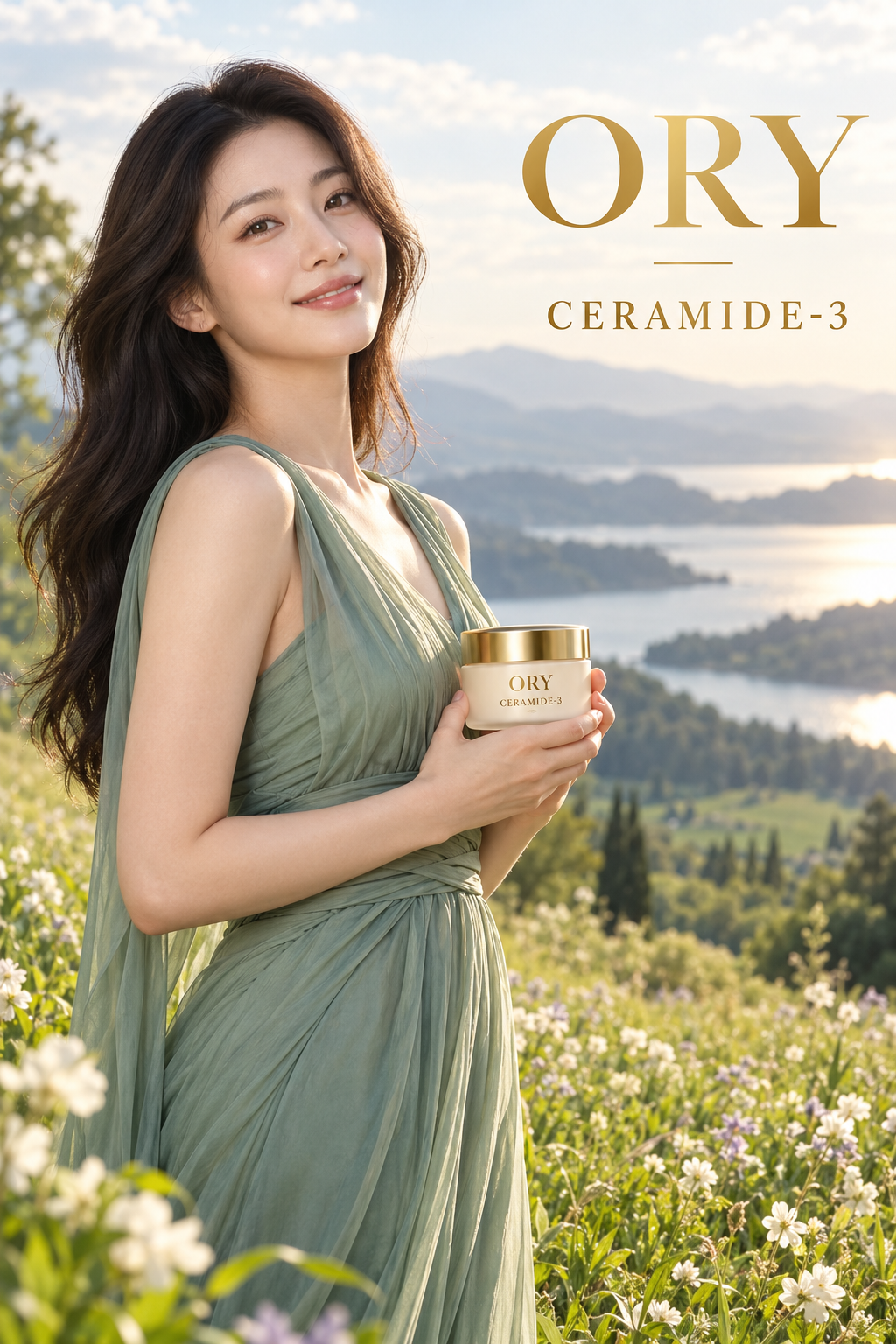

ORY® product lines:
☑ Skincare
☑ Haircare (non-cationic leave-ins and shampoos; Ceramide NP alone for conditioners)
☒ Handmade Soap (rinse-off; destroyed value)
☑ Cosmetics — three-line dual-use ingredient
Ceramides are the waxy lipids that make up roughly half of the skin’s outer barrier — the “mortar” between corneocyte “bricks” — and their loss is a defining feature of dry, aged, and eczema-prone skin: atopic dermatitis skin has significantly reduced ceramide levels [1], and barrier recovery depends on replacing ceramides, cholesterol, and fatty acids together in the right proportion [2, 3]. ORY®‘s Ceramide Complex is a multi-lamellar liposomal blend that does exactly that: three skin-identical ceramides (NP, AP, and EOP), their precursor phytosphingosine, and cholesterol, pre-organized into layered structures identical to the skin’s own lipid lamellae so they slot directly into the barrier [4]. A cream formulated to mimic these natural moisturizing systems significantly increased hydration in a clinical study [4], and phytosphingosine adds documented antimicrobial and anti-inflammatory activity against acne [5]. This document combines the earlier Ceramides and Ceramide-3 entries: Ceramide NP (formerly “Ceramide 3”) is the single most abundant skin ceramide and the one used alone in haircare and simpler formulas; the Complex is ORY®‘s preferred form for barrier repair.
What is Ceramide Complex made of?
Ceramide Complex is a viscous, water-dispersible liposomal concentrate (2.5% active lipids) built from vegetable-derived, semi-synthetic components, preserved with phenoxyethanol and ethylhexylglycerin and produced with RSPO mass-balance palm. Components [2–5]:
- Ceramide NP (Ceramide 3): The most abundant skin ceramide; core barrier lipid; also used alone in haircare and cosmetics.
- Ceramide AP (Ceramide 6-II): Alpha-hydroxy ceramide; supports barrier and normal desquamation.
- Ceramide EOP (Ceramide 1): Long-chain, linoleate-linked ceramide that “rivets” lipid layers together; most depleted in atopic skin [1].
- Phytosphingosine: Ceramide precursor; antimicrobial and anti-inflammatory; anti-acne activity in vitro and in vivo [5].
- Cholesterol: Essential partner — barrier recovery requires ceramides, cholesterol, and fatty acids together (physiologic ~3:1:1 ratio) [3].
- Sodium lauroyl lactylate (anionic liposome builder), carbomer, xanthan gum: Structure and dispersion — the anionic component makes the Complex incompatible with cationic (BTMS) emulsions.
- Use rate 3–5% of formula (0.075–0.125% active lipids); water phase; heat-tolerant to 80 °C; final pH 5–7; store 10–15 °C.
What skin type is best suited for Ceramide Complex?
Ceramide Complex suits all seven ORY® skin types and is the cornerstone of barrier repair:
- Dry: The primary use — replaces the ceramides dry skin lacks; increases hydration [4].
- Sensitive: Rebuilds the barrier in eczema-prone and reactive skin [1, 2]; calms.
- Mature: Restores age-depleted ceramides; improves firmness of the barrier and reduces water loss.
- Acne-prone: Phytosphingosine is anti-acne [5]; ceramides offset the barrier damage of acne actives; non-comedogenic.
- Oily: Lightweight liposomal delivery; oil-free barrier support.
- Combination: Barrier support across zones.
- Normal: Preventive barrier maintenance and post-active recovery.
What hair type is best suited for Ceramide Complex?
Ceramides are native to the hair cuticle’s lipid layer and are lost with bleaching and heat; ceramide-based haircare helps re-seal the fiber:
- Color-treated or chemically processed: The core use — replaces cuticle ceramides stripped by bleach and dye; reduces porosity and breakage.
- Dry or damaged: Restores the cuticle lipid layer; improves smoothness and shine.
- Curly and coily: Re-seals the cuticle to hold moisture.
- Sensitive scalp: Rebuilds scalp barrier in leave-on scalp treatments.
- Mature or thinning: Strengthens fragile fibers.
- Straight and wavy: Light leave-in repair.
- Oily and dandruff-prone scalp: Scalp-barrier support (use non-cationic formats).
What are the benefits of Ceramide Complex?
Ceramide Complex’s benefits are supported by barrier science and clinical study [1–5]:
- Barrier repair: Replaces the ceramides depleted in dry, aged, and atopic skin [1, 2]; physiologic lipid ratio accelerates recovery [3].
- Hydration: Significant hydration increase from a skin-mimetic lipid cream [4]; reduces transepidermal water loss.
- Multi-lamellar delivery: Liposomal layers integrate directly into the stratum corneum [4].
- Anti-inflammatory and antimicrobial: Phytosphingosine reduces inflammation and acne bacteria [5].
- Post-active recovery: Restores the barrier after retinol, acids, and procedures.
- Anti-aging support: Stronger barrier means less irritation, dryness, and fine dehydration lines.
- Hair cuticle repair: Re-seals damaged cuticle lipid layers.
- Cosmetic comfort: Barrier-supporting foundations and primers for dry skin.
Dual use across ORY® product lines
Ceramide Complex is a leave-on active for three ORY® lines; in soap it would rinse away, and its anionic structure restricts it to non-cationic haircare (Ceramide NP alone is used in cationic conditioners).
Pros and cons of Ceramide Complex
Pros
Cons
- Skin-identical, physiologic ratio: Ceramides + cholesterol + fatty acids [3].
- Three ceramides plus precursor: Broader than single-ceramide products.
- Liposomal, ready-to-use: No solvent or high-heat dissolution needed.
- Clinical hydration evidence: [4].
- Anti-acne phytosphingosine: [5].
- Cost: Premium ingredient; 2.5% active matter.
- Cationic incompatibility: Not for BTMS conditioners — use Ceramide NP alone there.
- Viscosity drop: May thin existing creams; adjust thickener.
- pH window: 5–7 only; not for acid serums (pH <5).
- Cold storage: 10–15 °C long-term.
- No soap role: Rinse-off waste.
What is the best application of Ceramide Complex?
Ceramide Complex is built into leave-on barrier products:
- Barrier cream: 5% Complex with shea, squalane, and niacinamide; AM/PM for dry and eczema-prone skin.
- Moisturizer: 3–4% for daily barrier maintenance.
- Serum: 3–5% in a water-based serum with hyaluronic acid and sodium PCA.
- Post-active/post-procedure cream: 5% with Centella and allantoin.
- Eye cream: 3%.
- Hair leave-in or serum (non-cationic): 2–3%; or Ceramide NP 0.1% in conditioner.
- Cosmetics: 2–3% in barrier foundations; Ceramide NP in lip balm.
- Pairing: Cholesterol and fatty-acid-rich oils, niacinamide (boosts ceramide synthesis), humectants; alternate with retinol/acids.
Peer-reviewed references
- Imokawa G, Abe A, Jin K, Higaki Y, Kawashima M, Hidano A. Decreased level of ceramides in stratum corneum of atopic dermatitis: an etiologic factor in atopic dry skin? Journal of Investigative Dermatology. 1991;96(4):523–526.
- Coderch L, López O, de la Maza A, Parra JL. Ceramides and skin function. American Journal of Clinical Dermatology. 2003;4(2):107–129.
- Man MQ, Feingold KR, Elias PM. Exogenous lipids influence permeability barrier recovery in acetone-treated murine skin. Archives of Dermatology. 1993;129(6):728–738.
- Spada F, Barnes TM, Greive KA. Skin hydration is significantly increased by a cream formulated to mimic the skin’s own natural moisturizing systems. Clinical, Cosmetic and Investigational Dermatology. 2018;11:491–497.
- Pavicic T, Wollenweber U, Farwick M, Korting HC. Anti-microbial and -inflammatory activity and efficacy of phytosphingosine: an in vitro and in vivo study addressing acne vulgaris. International Journal of Cosmetic Science. 2007;29(3):181–190.
- Lotioncrafter. Ceramide Complex — product specification and formulation guide. lotioncrafter.com/products/ceramide-complex (accessed September 2026). (Supplier technical source.)
Disclaimer:
The information on this page is provided by ORY International, LC for educational purposes only. It summarizes published research about Ceramide Complex (ceramides NP, AP, and EOP with phytosphingosine and cholesterol) as an ingredient, including laboratory and animal studies and clinical studies of formulas that may differ from ORY® products. Results from these studies may not apply to every person or to ORY® products. This page is not medical advice and does not replace advice from a dermatologist, physician, or other qualified healthcare provider.
ORY® Skincare, Haircare, Handmade Soap, and Cosmetics products are cosmetics. They are not intended to diagnose, treat, cure, mitigate, or prevent any disease or condition, including eczema, dermatitis, acne, dandruff, or any other condition. References to FDA or Cosmetic Ingredient Review (CIR) findings describe the ingredient, not ORY® products, and do not mean FDA has reviewed or approved any ORY® product.
Results vary by skin and scalp type, formulation, and use. This complex is rarely irritating. Any cosmetic can cause irritation, sometimes from other ingredients. Always patch test, follow label directions, and stop use if irritation occurs. If you are pregnant, nursing, have a medical condition, or are buying for a child, consult a healthcare provider before use.
ORY International, LC works to keep this page accurate and current but makes no warranty as to its completeness. To the fullest extent permitted by law, ORY International, LC is not liable for any loss or injury arising from reliance on this information or from use of any product contrary to its label directions. To report a reaction, contact us at [insert contact email / phone].